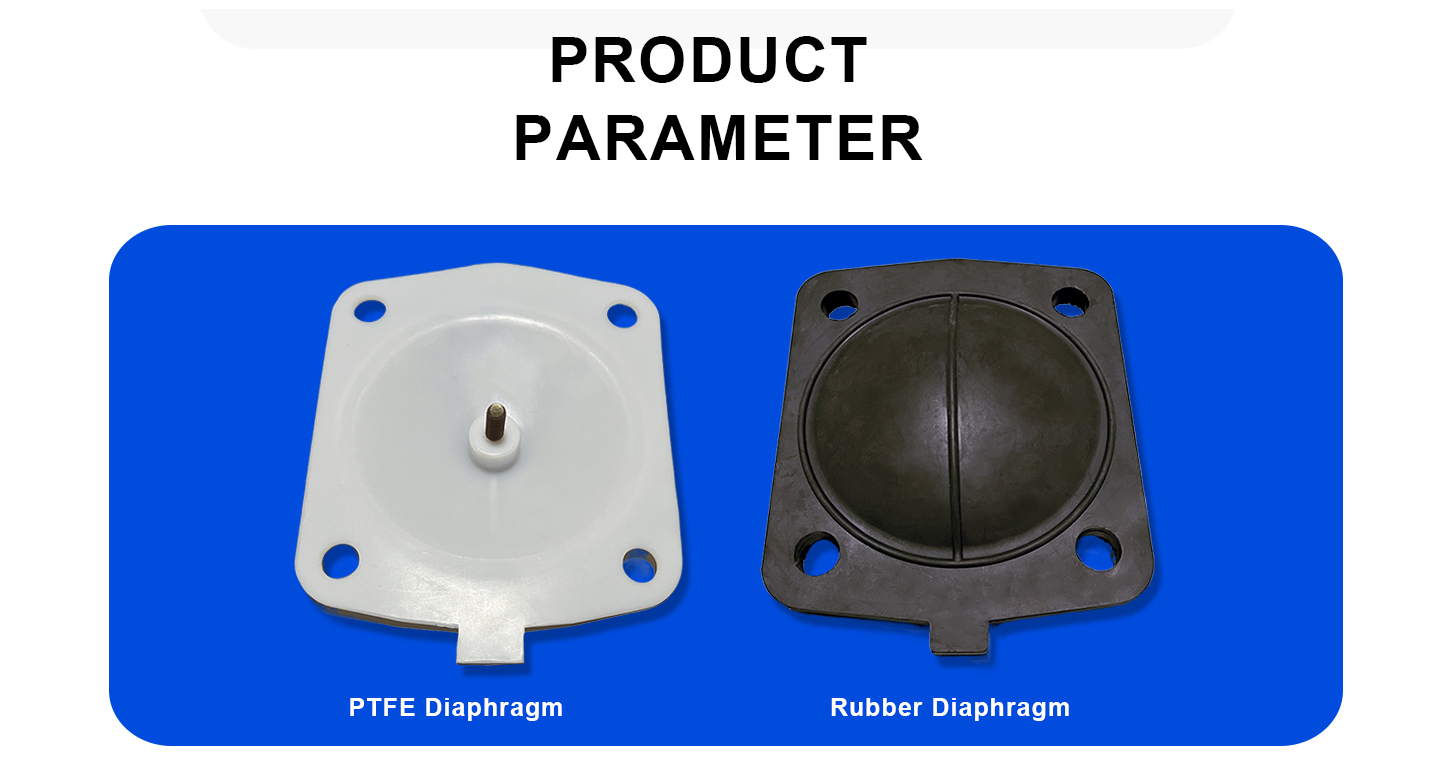
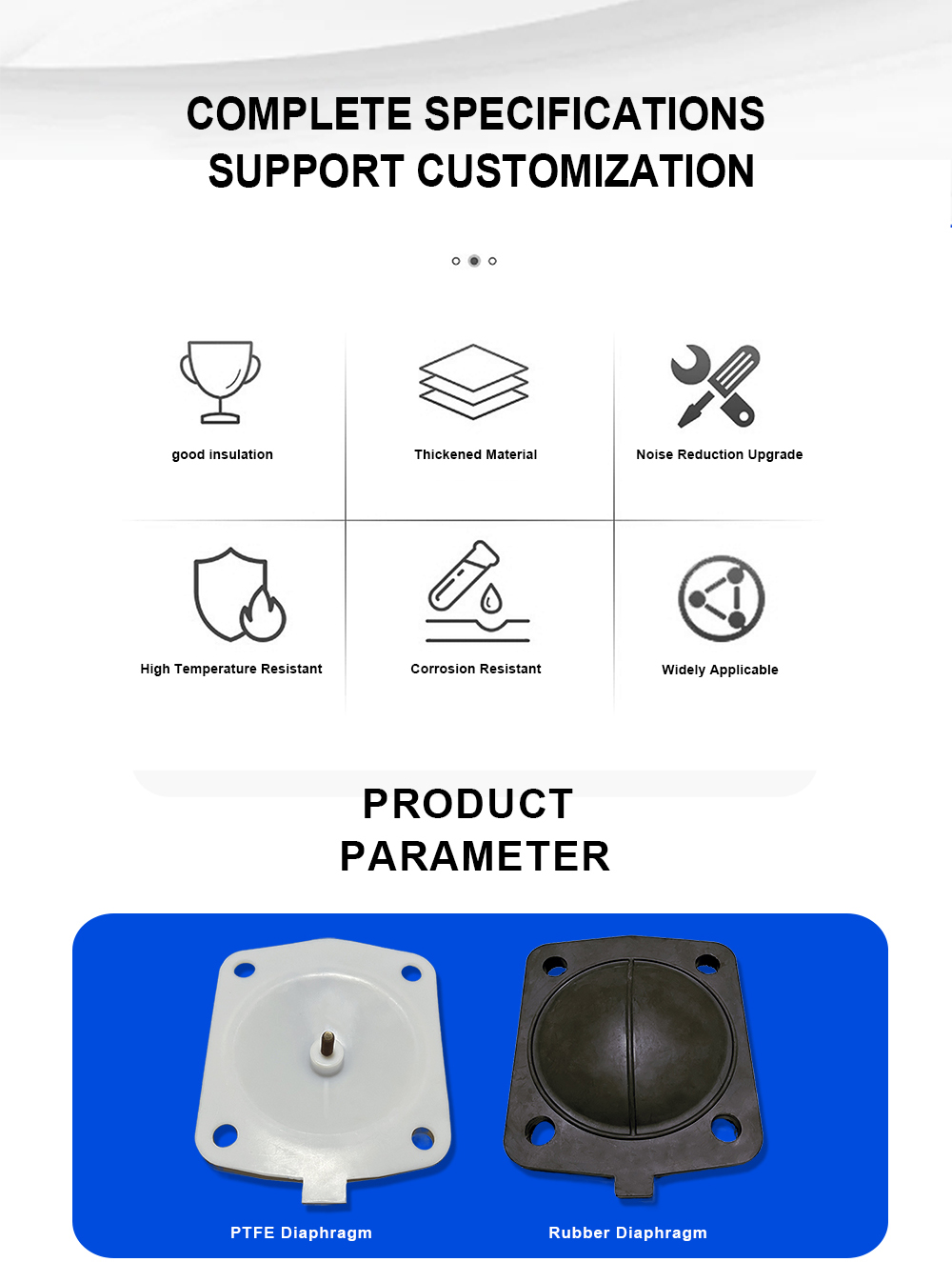
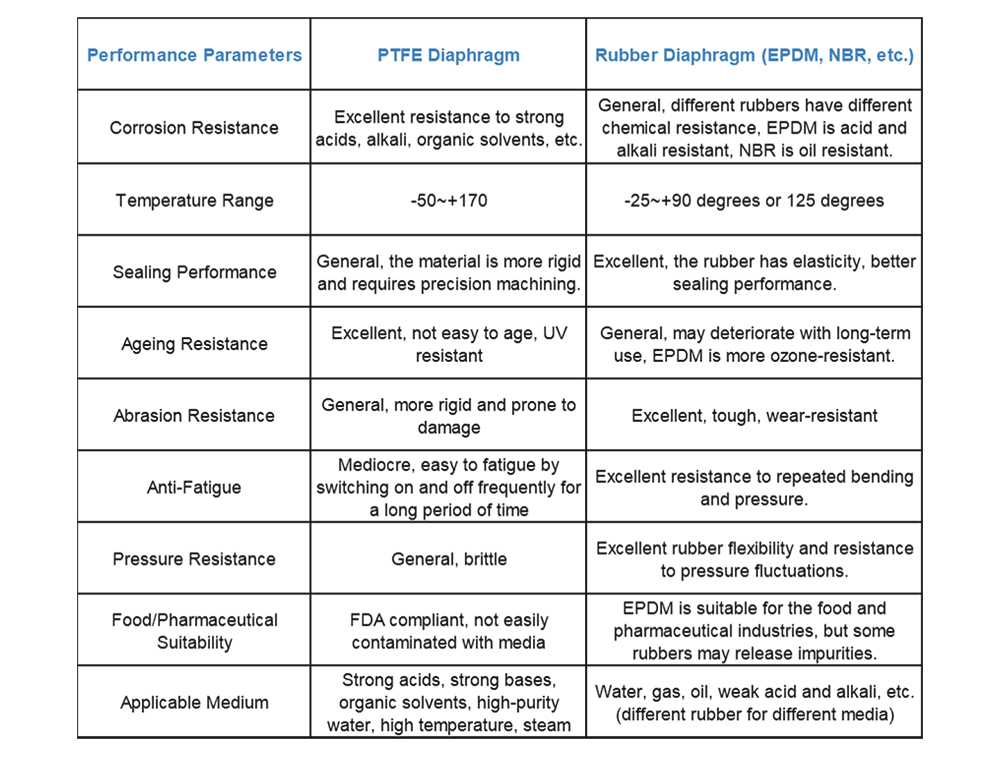
| Performance Parameters | PTFE Diaphragm | Rubber Diaphragm (EPDM, NBR, etc.) |
| Corrosion Resistance | Excellent resistance to strong acids, alkali, organic solvents, etc. | General, different rubbers have different chemical resistance, EPDM is acid and alkali resistant, NBR is oil resistant. |
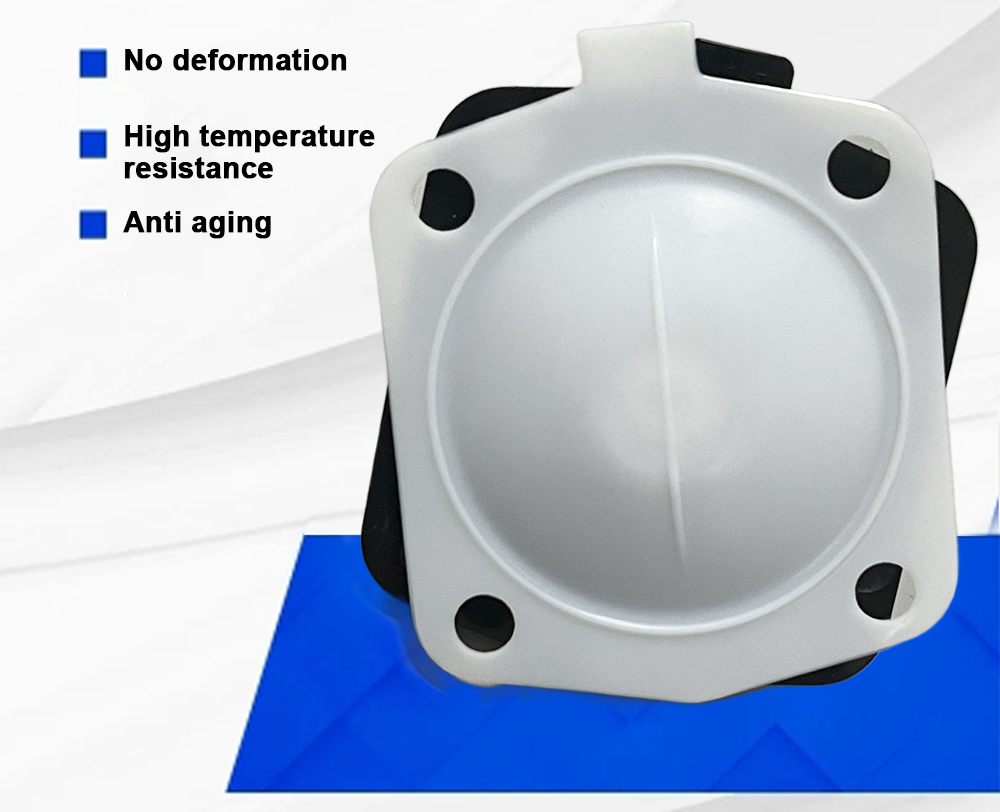
| Temperature Range | -50~+170 | -25~+90 degrees or 125 degrees |
| Sealing Performance | General, the material is more rigid and requires precision machining. | Excellent, the rubber has elasticity, better sealing performance. |
| Ageing Resistance | Excellent, not easy to age, UV resistant | General, may deteriorate with long-term use, EPDM is more ozone-resistant. |
| Abrasion Resistance | General, more rigid and prone to damage | Excellent, tough, wear-resistant |
| Anti-Fatigue | Mediocre, easy to fatigue by switching on and off frequently for a long period of time | Excellent resistance to repeated bending and pressure. |
| Pressure Resistance | General, brittle | Excellent rubber flexibility and resistance to pressure fluctuations. |
| Food/Pharmaceutical Suitability | FDA compliant, not easily contaminated with media | EPDM is suitable for the food and pharmaceutical industries, but some rubbers may release impurities. |
| Applicable Medium | Strong acids, strong bases, organic solvents, high-purity water, high temperature, steam | Water, gas, oil, weak acid and alkali, etc. (different rubber for different media) |